

Last updated: October 1, 2026
Quick answer: After an arrest in Colorado, the person is usually booked into jail and then brought before a court for a bond hearing. State law says that hearing must happen as soon as practicable, and no later than 48 hours after the person arrives at the jail, except in a few narrow situations (C.R.S. 16-4-102(2)(a), 2026 official text, Title 16). At the first court appearance, the judge explains the person's rights and the charges. If the charge falls under Colorado's criminal code (Title 18), an automatic protection order also takes effect.
An arrest moves fast, and it is hard to think clearly when it happens to you or someone you love. This guide walks through what usually happens next and links to the Colorado laws behind each step.
Step 1: Arrest and booking
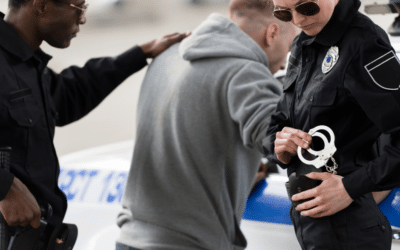
After an arrest, police usually take the person to a jail or holding facility for booking. Booking generally means recording personal information, taking fingerprints and a photo, and storing the person's belongings.
A person who is arrested has the right to contact a lawyer of their choice and a family member. This must be allowed at the earliest possible time after the person arrives at the police station or jail where they are first taken. It can be done by a reasonable number of phone calls or another reasonable method (C.R.S. 16-3-402(1), 2026 official text, Title 16).
A 2025 law, House Bill 25-1049, also requires jails to let a lawyer or the lawyer's representative start private, unrecorded calls with a person in custody. These can be by phone, video or another method the jail chooses, and they are free for both sides (C.R.S. 16-3-404(1.5), 2026 official text, Title 16). Jails can still apply reasonable procedures.
Other jail calls are often recorded. A lawyer can explain what is and is not safe to talk about on those calls.
Some people are released with a summons
When police make an arrest without a warrant and the charge is a misdemeanor or petty offense (a petty offense is a minor offense below a misdemeanor), they may instead release the person with a summons to appear in court on a set date. The person signs a written promise to appear (C.R.S. 16-3-105(1)(b), (2), 2026 official text, Title 16). That option is not allowed at the scene when the case involves an act of domestic violence (C.R.S. 16-3-105(1.5)).
If police do not release the person with a summons after a warrantless arrest for a misdemeanor or petty offense, the person must be taken "without unnecessary delay" before the nearest available county or district judge. A complaint (the formal written charge) must then be filed in county court. The person gets a copy at or before the arraignment, the hearing where the person is formally told the charges and asked to enter a plea (C.R.S. 16-2-112).
Step 2: The bond hearing, within 48 hours
Colorado law sets a deadline for the first bond hearing (C.R.S. 16-4-102(2)(a), 2026 official text, Title 16). A person in custody must be brought before a court for bond setting "as soon as practicable, but no later than forty-eight hours" after arriving at a jail or holding facility. This rule applies to arrests on or after April 1, 2022, and came from House Bill 21-1280. A judge, magistrate or bond hearing officer must enter an individualized bond order, and the hearing can take place by video.
A delay is allowed only in limited cases, such as an emergency that closes the court. It is also allowed when the person refuses to attend, or cannot attend because of drug or alcohol use or a serious medical or behavioral health emergency. After an arrest for drunk or drugged driving, such as DUI or DWAI (driving while ability impaired), the person cannot attend a bond hearing until they are no longer intoxicated or under the influence of drugs. They stay in custody until they can safely attend (C.R.S. 16-4-104(4)).
There is also a separate rule for people on parole. If a person on parole is arrested for a crime of violence (a legal term for certain serious violent crimes), or for a crime involving a deadly weapon or injury to another person, bond cannot be set until at least 72 hours after the arrest (C.R.S. 16-4-101(5), 2026 official text, Title 16).
The person has the right to be represented by a lawyer at this first hearing, and the court must notify the public defender about each person in custody beforehand (C.R.S. 16-4-104(5)).
Step 3: How bond is set
Colorado starts from a presumption that people in custody are eligible for release on bond with "the appropriate and least-restrictive conditions," and any money condition must be reasonable (C.R.S. 16-4-103(4)(a)). The court must consider the person's individual situation, including their financial condition (C.R.S. 16-4-103(3)(a)). A small number of very serious charges follow separate rules that can allow a person to be held without bail (C.R.S. 16-4-101, 2026 official text, Title 16).
The judge may also consider things like the person's job, family ties, where they have lived, prior record, any past missed court dates, and any risk to witnesses or the community (C.R.S. 16-4-103(5)).
Some courts use a bond schedule, a preset list of amounts by charge. If a court uses one, it must also weigh the person's individual risk and circumstances, not only the level of the offense (C.R.S. 16-4-103(4)(b)).
The four types of bond
Under C.R.S. 16-4-104(1), the court chooses from:
- Personal recognizance (PR) bond. The person signs a bond for an amount the court sets but does not pay money up front.
- PR bond with conditions. The same, plus conditions other than money, meant to make sure the person comes to court and others stay safe.
- Bond with secured money conditions. The court sets a dollar amount that must be secured before release. It can be secured in one of four ways: a cash deposit of the full amount with the court, Colorado real estate with equity worth at least one and one-half times the amount, sureties (people who promise to pay if the person does not come to court) worth at least one and one-half times the amount, or a bail bonding agent. The person chooses the way, unless the court finds that a specific way is needed.
- Bond with secured real estate conditions. Property is pledged through a deed of trust (a document, recorded with the county, that lets the court collect from the property if the person does not follow the bond).
Paying bond
Family members often pay bond. Under C.R.S. 16-4-102(2) (2026 official text, Title 16, as updated by House Bill 25-1015):
- Bond does not have to be paid in the arrested person's name, and a money order or cashier's check may be made out to the county holding them.
- Jails must accept at least cash, money order or cashier's check, and must offer a way to pay online.
- The bond processing fee can be no more than $10, and kiosk fees are not allowed. A card processing fee of up to 3.5% may apply.
- Once bond is posted, the person must be released even if fees are unpaid, such as booking or bond processing fees. The $10 bond fee and the card fee of up to 3.5% can still be charged to the person as a debt after release, if they were not paid when bond was posted (C.R.S. 16-4-102(2)(h)(I)(A)).
- Unless extraordinary circumstances exist, the jail must release the person within six hours. For a PR bond, the clock starts once the bond is set and the person is back at the jail. For a cash bond, it starts once the bond is set, the person is back at the jail, and the payer tells the jail they are ready to post bond. If bond is paid online, it starts when the payment is submitted.
- Electronic monitoring can add time. If the court orders electronic monitoring (such as an ankle monitor), the jail may hold the person up to 24 hours after bond is posted so the monitor can be fitted, if the court allows it. If a judge orders monitoring to protect a specific person, orders no contact with that person, and finds the person should not be released without a monitor for public safety, these time limits do not apply (C.R.S. 16-4-102(2)(e), 2026 official text, Title 16).
Step 4: Your rights at the first appearance
At the first court appearance or the arraignment (the hearing where the person is formally told the charges and asked to enter a plea), whichever comes first, the judge must explain these points and make sure the person understands them (C.R.S. 16-7-207):
- The person does not have to make a statement, and anything they say can be used against them.
- The person has the right to a lawyer.
- If the person cannot afford a lawyer, they can apply for a court-appointed one.
- Any plea the person enters must be voluntary.
- The person has a right to bail if the offense is bailable, and the court tells them the amount set.
- The person has the right to a jury trial.
- The judge explains the nature of the charges against the person.
Step 5: The automatic protection order
When someone is charged with a crime under Title 18, Colorado's main criminal code, a mandatory protection order starts when the judge advises the person at the first appearance or arraignment. It usually lasts until the case ends, which includes finishing any jail or prison sentence, probation or parole (C.R.S. 18-1-1001(1)(a), (8)(b), 2026 official text, Title 18). It bars the person from harassing, molesting, intimidating, retaliating against or tampering with any witness or victim in the case. Either side can ask the court to change or dismiss the order (C.R.S. 18-1-1001(3)(a)(I)).
At that first appearance, the judge must explain the order. The judge must also warn that breaking it can be punished as contempt of court (a penalty for disobeying a court order) and may be charged as a separate crime, the misdemeanor of violating a protection order. When it applies, the judge must also warn that the same conduct may be a felony: intimidating a witness or victim, or retaliating against one (C.R.S. 18-1-1001(2), 2026 official text, Title 18). The two crime warnings were added for offenses on or after July 1, 2025 (House Bill 25-1148).
The court can also add further orders to protect an alleged victim or witness. These can include orders to stay away from a home or other places, to have no contact, and not to have firearms or other weapons (C.R.S. 18-1-1001(3)(a)(II), 2026 official text, Title 18). Before July 1, 2025, these further orders were allowed only in domestic violence cases and in cases involving most of the crimes covered by Colorado's Victim Rights Act. For offenses on or after July 1, 2025, House Bill 25-1148 lets the court add them in any case that has this mandatory protection order, which means any case with a Title 18 charge.
Extra steps when the Victim Rights Act applies
Colorado's Victim Rights Act lists the crimes it covers. The list includes assault, menacing, stalking, sexual assault, robbery, first degree burglary, and any crime that police, the prosecutor or the court identifies as domestic violence (C.R.S. 24-4.1-302(1), 2026 official text, Title 24). In those cases, the alleged victim has added rights, including the right to:
- Be told about the protection order and, on request, how terms can be added or changed.
- Be told when the accused person is released from jail.
- Be heard at a court hearing on a request to lower or change bond or bond conditions. When such a request is made, the court must set a hearing, and the prosecutor must tell the alleged victim about it.
- Be heard if the accused person asks the court to change the no-contact part of the protection order.
(C.R.S. 24-4.1-302.5(1)(c), (1)(d), (1.6), 2026 official text, Title 24)
In domestic violence cases, the firearm rules are stricter. They apply when the court finds probable cause (enough reason to believe) that the charge includes an act of domestic violence involving the use, attempted use or threat of physical force. In that case, the judge must order the person not to have or buy any firearm or ammunition while the order lasts (C.R.S. 18-1-1001(9), 2026 official text, Title 18).
The person must also give up any firearms and ammunition they have. This is generally due within 24 hours after being served with the order, or after release if the person is in jail, not counting weekends and legal holidays. A judge can also require it before release on bond. Within seven business days after the order, the person must file a sworn statement about any firearms, and the court sets a hearing to check that the order was followed. Failing to give up firearms on time, or to file the required proof, counts as violating the order and leads to an arrest warrant (C.R.S. 18-1-1001(9)(a)-(c), (9)(e), (9)(i), 2026 official text, Title 18).
In domestic violence, stalking and certain sex offense cases, the judge must state the order's terms in court before release on bond. The person must acknowledge them in court and in writing (C.R.S. 18-1-1001(5)).
Step 6: After a DUI arrest, a separate 7-day DMV deadline
A DUI arrest can start two cases: a criminal case in court and a driver's license case with the Colorado DMV. When an officer serves a notice of revocation, for example after a breath test or a refusal, a person who wants a DMV hearing must ask for it in writing within seven days. The 7 days run from the day the person receives the notice. If the DMV does not receive the request in that time, the right to a hearing is waived (C.R.S. 42-2-126(7)(b)). Because the DMV must receive the request within the 7 days, a request sent near the end of that time may arrive too late.
A late request is accepted only in narrow cases. It must include a sworn explanation. The DMV must also find that the person did not actually get notice, or could not respond in time because of something like a hospital stay or time in jail. Even then, the revocation is not put on hold while the person waits for the hearing (C.R.S. 42-2-126(7)(c)).
After a blood test, the notice usually comes later by mail (Colorado DMV). A mailed notice is treated as received three days after it is mailed, and the 7 days run from then (C.R.S. 42-2-126(6)(b)(II)).
See our DUI page and DMV hearings page.
Step 7: Talking to a lawyer
A person can talk to a defense lawyer before the bond hearing or first appearance, not only after. A lawyer can explain the charges and the process, argue for reasonable release conditions, explain what a protection order allows, and help keep track of court dates and the DMV deadline. Read about our criminal defense services.
If you are calling for a family member, it helps to have their full legal name, date of birth, the jail where they are held, the booking number if you have it, and the charge.
Frequently asked questions
How long can I be held before seeing a judge in Colorado? A person in custody must be brought before a court for bond setting as soon as practicable, and no later than 48 hours after arriving at the jail. A delay is allowed only in limited situations, such as an emergency that closes the court or a serious medical emergency (C.R.S. 16-4-102(2)(a), 2026 official text, Title 16). A person on parole who is arrested for certain violent, weapon or injury crimes cannot have bond set until at least 72 hours after the arrest (C.R.S. 16-4-101(5), 2026 official text, Title 16).
Can a family member pay bond? Yes. Bond does not have to be paid in the arrested person's name, and a money order or cashier's check may be made out to the county holding them. Each jail must also offer a way to pay bond online (C.R.S. 16-4-102(2)(b), 2026 official text, Title 16).
What is a PR bond? A personal recognizance bond lets a person leave custody without paying money up front. The person signs a bond for an amount set by the court and agrees to follow the release conditions (C.R.S. 16-4-104(1)(a)).
Do I get a lawyer at the bond hearing? Yes. The person has the right to be represented by a lawyer at the first bond hearing, and the court must notify the public defender about each person in custody before that hearing (C.R.S. 16-4-104(5)).
When does the 7-day DMV deadline start? The 7 days run from the day the person receives the notice of revocation. A notice sent by mail is treated as received three days after it is mailed. The DMV must receive the written hearing request within those 7 days (C.R.S. 42-2-126).
Talk to a Colorado criminal defense lawyer
If you or someone you love has been arrested in Colorado, Criminal Law Matters offers a free consultation. Call (720) 770-7324 or contact us online to talk through what happens next.
This article is general information, not legal advice. Reading it or contacting us does not create an attorney-client relationship.
Contact us Now
Is Drug Possession a Felony in Colorado?
Drug possession in Colorado is often a misdemeanor, but the drug, the amount, fentanyl and prior offenses can make it a felony. See the current rules.

Colorado Express Consent Law: What Happens If You Refuse a Test
Colorado’s express consent law explained: what counts as refusing a breath or blood test, how long the license revocation lasts, and the 7-day deadline.

Felony Defense Lawyer Denver Colorado
Protecting your rights and freedom with unparalleled legal expertise in felony cases.Contact us today to discuss your case with a dedicated felony defense attorney.Criminal Law Matters is dedicated to providing robust legal defense for individuals facing serious...

Colorado Misdemeanor Classes Explained: What Changed in 2022
Colorado has two main misdemeanor classes for crimes on or after March 1, 2022. See the penalty table, what happened to class 3, and why the date matters.

Criminal Defense Lawyer Colorado
Secure your future with a seasoned Colorado criminal defense lawyer. Our dedicated team is here to fight for you, ensuring your rights are protected every step of the way.In Colorado, facing criminal charges can be daunting, but having a skilled defense lawyer by your...

How much does a DUI Lawyer in Colorado
Understanding DUI Law in Colorado You could face felony DUI charges in Colorado if you have at least three prior convictions for alcohol-related traffic offenses, vehicular assault, vehicular homicide, or both, anywhere in the United States or any territory...